Getting Ready for Kindergarten: What the Skills Actually Look Like
Kindergarten readiness gets talked about constantly and defined rarely. Here is what the actual skills look like, day to day.
September 23, 2026 · 3 min read
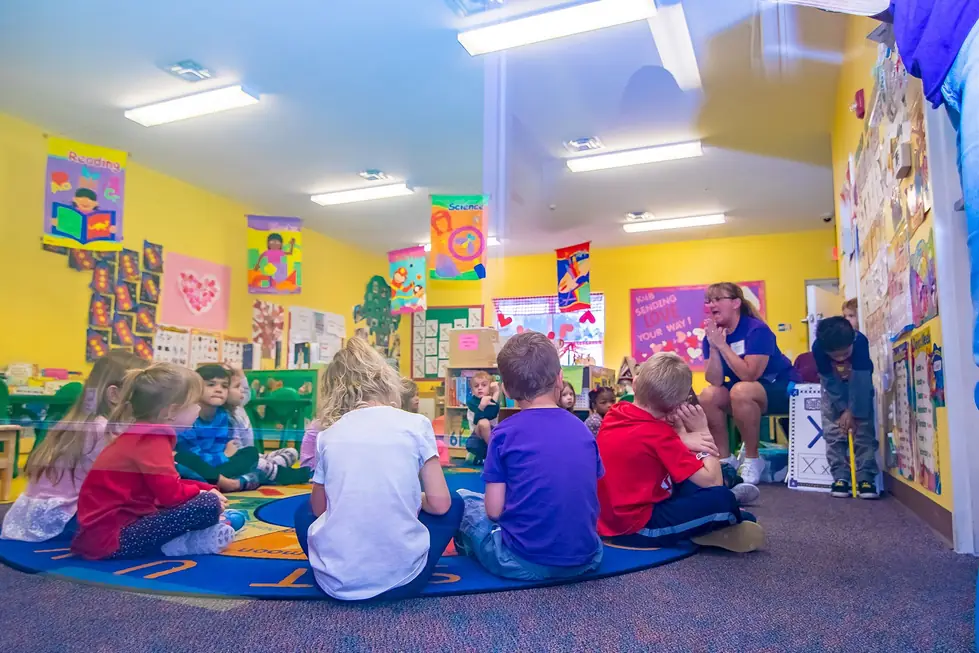
Readiness is more than knowing letters
Ask ten parents what "kindergarten ready" means and you'll get ten different answers: knowing the alphabet, being able to write your name, sitting still for circle time. All of those matter, but they're only part of it. Kindergarten also asks a child to follow multi-step directions, manage a full day away from a parent, and handle a keyboard and mouse well enough to take a computer-based assessment, since that is how many kindergarten readiness tests are now given.
Why computer skills matter earlier than you'd think
Growing Room's preschool classrooms note that the state's kindergarten readiness test is completed on a computer, using a mouse, which is one reason its 2s, 3s, and 4s rooms and its Voluntary Pre-K rooms use a computer lab twice a week. That's a practical, unglamorous skill, clicking, dragging, following an on-screen prompt, and it's one a lot of readiness conversations skip past in favor of letters and numbers.
What's actually happening in the classroom
The center describes its 2s, 3s, and 4s program as blending a STEAM curriculum with the Creative Curriculum framework, inside a "small town" style interior with shops and streets. The character focus named for this age group covers integrity, respect, responsibility, caring, and fairness, alongside the academic work. Voluntary Pre-K continues that STEAM and Creative Curriculum blend, which the center says is aimed at building literacy and kindergarten readiness together, rather than treating them as separate goals.
What you can practice at home
You don't need a curriculum at home to support any of this. A few simple habits build the same muscles:
- Let your child use a mouse or trackpad on a shared family device sometimes, with you nearby.
- Give two-step instructions, like "get your shoes, then meet me at the door", instead of one at a time.
- Practice writing their name in whatever way is comfortable, crayon, chalk, finger in sand.
- Read together daily, even five minutes, and talk about what happened in the story.
- Practice sitting through a short task start to finish, like a puzzle or a simple chore.
Fine motor skills matter as much as academic ones
A child who can hold a pencil, use scissors, and manage buttons and zippers independently walks into kindergarten with a real advantage, even before letters and numbers come into it. These skills build slowly through ordinary play, not flashcards: stacking blocks, stringing beads, tearing paper for a collage all build the same hand strength and control a kindergarten classroom will expect from day one.
Executive function is the quiet skill nobody names
Following a two-step direction, waiting a turn, moving from one activity to the next without a meltdown, these are executive function skills, and they often determine how smooth a child's first weeks of kindergarten feel more than any single academic fact does. A classroom that practices transitions, cleanup routines, and turn-taking every day is quietly building this skill alongside the STEAM and literacy work parents notice more easily.
Ask about the transition to kindergarten specifically
Beyond curriculum, it's worth asking any preschool directly how it prepares children for the actual mechanics of a kindergarten classroom: a full school day, a new building, new teachers, a bigger group of peers. Ask if staff talk with families about what to expect in the final months before the move, and whether there's any coordination with local elementary schools. A strong preschool program treats the kindergarten transition as its own specific goal, not just a byproduct of a good curriculum.
Ask what a typical week looks like
Every center describes its curriculum differently on paper. The more useful question on a tour is what a typical week actually looks like for your child's specific age group, how the computer lab time works, and how teachers track progress toward kindergarten. Ask to see the classroom in session if you can, not just the empty room.
Visit a classroom
Growing Room runs 2s, 3s, and 4s and Voluntary Pre-K classrooms at both its Bonita Springs location, 25151 Bernwood Dr, phone (239) 495-0045, and its Fort Myers location, 8950 Gladiolus Dr, phone (239) 466-6646. Both centers are open Monday through Friday, 7:00 AM to 6:00 PM. Call to schedule a tour and see the readiness work in progress.
Growing Room Child Development Center, (239) 495-0045
Call (239) 495-0045More articles
What to Ask on an Infant Room Tour
A first look inside an infant classroom raises questions fast. Here is what to ask, and what Growing Room says about how it runs its own rooms.
What a Nut-Free Daycare Actually Means Day to Day
Nut-free sounds simple until you ask what it actually covers. Here is what it means for meals, snacks, and everyday choices at a nut-free center.